When your hearing feels obstructed, it can impact your daily routine and leave you feeling withdrawn from your environment. It is typical to presume that muted sound indicates long-term hearing impairment, but the problem is often just a treatable cerumen obstruction.
Differentiating between a wax impaction and actual hearing impairment is vital for determining if you need a simple cleaning or a formal diagnostic exam. There is no reason to feel overwhelmed if auditory inputs seem muted. An exam can help you get to the bottom of it, but in the interim, here’s what you should consider about canal blockage (also known as cerumen impaction) vs. hearing loss.
How to Identify a Cerumen Impaction
Cerumen (cerumen) is a normal, protective substance that helps trap dirt and debris and keeps the auditory canal functional. Issues arise when too much wax builds up or becomes impacted.
Frequent indicators of cerumen impaction consist of:
- Muted sound quality that manifests over time or overnight
- A sensation of pressure or clogging in the ear
- Localized sensitivity or localized pain in the ear
- Constant humming or hissing sounds
- Auditory sharpness that changes or improves momentarily with jaw movement
Because obstructions are tangible, they frequently affect just a single ear at a time rather than each equally. Fortunately, once surplus wax is safely extracted, hearing often reverts to baseline instantly.
How Auditory Loss Typically Presents
Unlike a temporary obstruction, sensorineural hearing deficit typically advances steadily over years and is not resolved by clearing the canal.
Symptoms of true auditory impairment may include:
- Challenges with word clarity in crowded or noisy settings
- Often needing repetition during normal dialogue
- A tendency to boost sound volume notably to make up for hearing loss
- Difficulty hearing high-frequency sounds
- Hearing equally reduced in both ears
A key distinction is that true loss misses the tangible “plugged” sensation that follows a cerumen impaction.
Comparing Wax Buildup and Auditory Loss
While evaluating cerumen impaction vs. hearing loss, a few clues can help guide you in the correct direction:
- Onset: Cerumen blockages often come on suddenly; hearing loss develops slowly
- Longevity: Wax issues are treatable and short-term, whereas loss is typically chronic
- Symptoms: Fullness and irritation suggest wax; speech clarity issues suggest impairment
- Balance: Clogs are often asymmetrical, but lasting loss is commonly bilateral
The Dangers of At-Home Cerumen Removal
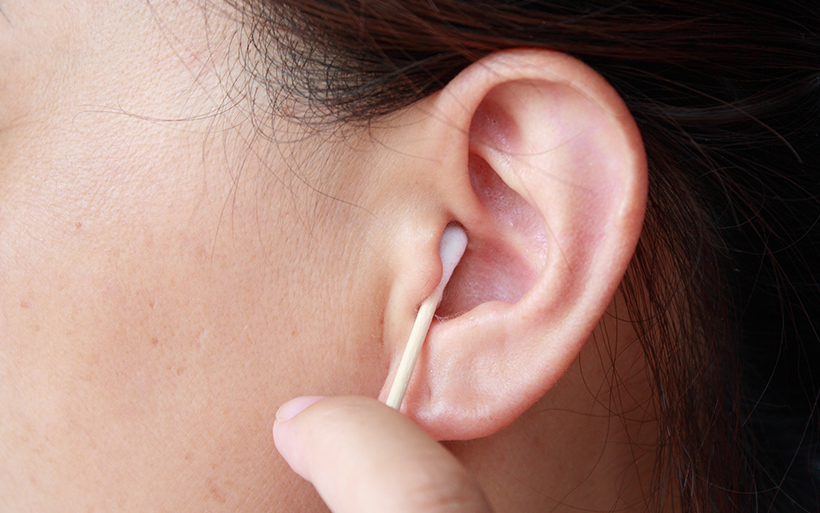
Numerous people make the error of attempting to extract a perceived blockage manually using probes or household items. Using external objects typically shoves the obstruction further into the ear, increasing the danger of injury.
According to the NLM, inserting items into the ear canal raises the risk of blockage and trauma.
On the other hand, presuming a problem is merely wax when it is truly hearing loss can prevent you from obtaining the help you need to remain connected.
The Importance of a Professional Ear Exam
A quick clinical check-up is the primary way to confirm if wax is truly the source of your muffled auditory issues.
When cerumen is the cause, clinical flushing or clinical clearance provides immediate resolution.
When the ear is clear but auditory input is still muffled, a diagnostic test is necessary to audit your auditory integrity.
The National Institute on Deafness and Other Communication Disorders (NIDCD) recommends prompt assessment anytime shifts in hearing interfere with your daily life.
Is It Cerumen Impaction or Hearing Loss?
Dampened sound is not a certain marker of chronic impairment.
Frequently, the problem is simply a collection of cerumen that can be quickly resolved.
A professional assessment will provide you with the answers you need to advance without concern.
Keep in mind: The only accurate way to distinguish the difference between cerumen impaction and hearing loss is with a clinical exam.
Getting answers early can avert pointless stress and ensure you receive the appropriate care at the right time.
Instead of guessing what is amiss, schedule a rapid check-up with our specialists to uncover the reality.